

How much is my house worth?
Published October 12, 2026
Key takeaways
 How much is my house worth? There’s no single number. Online estimates, agents, appraisers, and cash buyers each look at value differently, so they can come back with different figures.
- Location, condition, size and layout, recent nearby sales, and market conditions all shape what a buyer is willing to pay.
- Cash offers are usually below open-market value, so compare what you’d likely keep after commissions, repairs, and closing costs on each path.
The honest answer is that it depends on who you’re asking and how you plan to sell. An online estimate, an agent’s opinion, a formal appraisal, and a cash offer can all come back with different numbers. They’re each correct in their own way. What matters is understanding which number is relevant to your situation, and where those numbers tend to diverge.
What is my home worth? What affects your home’s value
A few things shape what a buyer is willing to pay:
- Location. School districts, neighborhood safety, proximity to jobs and everyday conveniences. These carry a lot of weight and aren’t something you can change about the property.
- Condition. A roof that needs replacing, a heating and cooling system that’s past its prime, or outdated kitchens and bathrooms will factor into any offer. So will deferred maintenance that’s been building up over the years.
- Size and layout. Square footage matters, but so does how the space is arranged. A functional layout tends to hold value better than raw square footage with awkward flow.
- Recent sales nearby. What similar homes in your area have actually sold for recently is one of the strongest signals of what yours might fetch. Buyers and their agents look at this closely.
- The market at the time you sell. When there are more buyers than homes available, prices tend to go up. When there are more homes than buyers, sellers often have to adjust expectations.

How does a home value calculator or estimator work?
Free online home value tools pull from public records (recent sales, tax assessments, property characteristics) and run that data through a formula to produce an estimate. They’re a reasonable place to start if you want a quick ballpark.
The limitation is that no automated tool can account for what’s actually inside your home. It doesn’t know that the kitchen was renovated last year or that the basement has had a water problem for years. In areas with a lot of recent sales and good public data, these estimates tend to be more accurate. In rural areas or neighborhoods where homes don’t change hands often, the estimate can be further off.
What an agent or appraiser will tell you
A real estate agent can look at what similar homes in your area have sold for recently, adjusted for differences in size, condition, and features. This gets closer to a real number than an automated tool because someone is actually looking at your home and the local context around it.
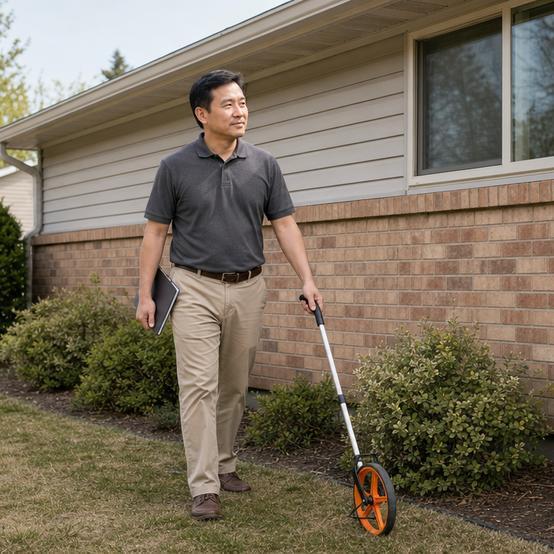
A formal appraisal goes further. A licensed appraiser visits the property, documents its condition, and produces a written report. This tends to be the most accurate way to value a specific home, but it costs money and is typically ordered as part of a buyer’s loan process rather than as a standalone step.
Neither tells you exactly what your home will sell for. Both are estimates of what your home could be worth based on available information.
Frequently asked questions
Usually, yes. A cash offer is often lower than the price a home might command on the open market because the buyer is factoring in the home’s condition, the work it may need, and their own costs.
But the offer price is only part of the picture. A traditional sale can also involve agent commissions, repairs, buyer-requested credits, and closing costs. The better comparison is what you’re likely to keep after those expenses on each path.
Location tends to have the biggest impact because it’s the one thing you can’t change about a property. Condition, size, layout, and recent sales of similar homes in the area also play a significant role in determining its value.
It depends on what you fix and how much you spend. Major systems like the roof, plumbing, and heating and cooling tend to matter more to buyers than cosmetic updates, though both can play a role. Some repairs and updates add more to the sale price than they cost. Others don’t.
They’re a useful starting point but not a final answer. Online tools can’t account for your home’s actual condition, recent updates, or anything that isn’t captured in public records. They tend to be more accurate in areas with a lot of recent sales and less accurate where homes don’t sell as often.
There are a few ways. A free online home value estimator can give you a quick ballpark based on public records and recent sales. A real estate agent can look at what similar homes nearby have actually sold for. A licensed appraiser can visit the property and produce a formal report. And a cash home buyer can give you an actual offer, which is the most direct way to find out what someone will pay for your home as it sits.